Impact of Circadian Rhythm Lighting on Office Work Focus: Guide
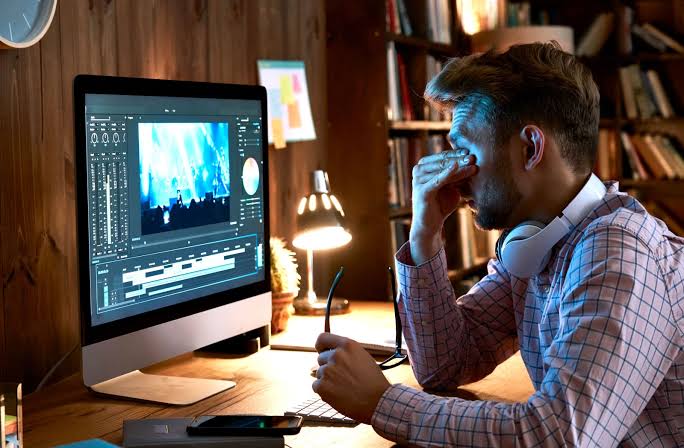
The biological relationship between indoor environments and human cognitive performance has become a major focus of modern occupational health and workplace design. For decades, office lighting was treated strictly as a utility—a static tool to ensure basic visibility. However, breakthroughs in neurobiology have revealed that the human eye does not just process light for sight; it also features specialized receptors that monitor environmental wavelengths to regulate our internal biological clock. When exposed to unvarying, unnatural office lighting for hours at a time, this internal clock can drift, leading to afternoon fatigue, sleep issues, and drops in mental clarity.
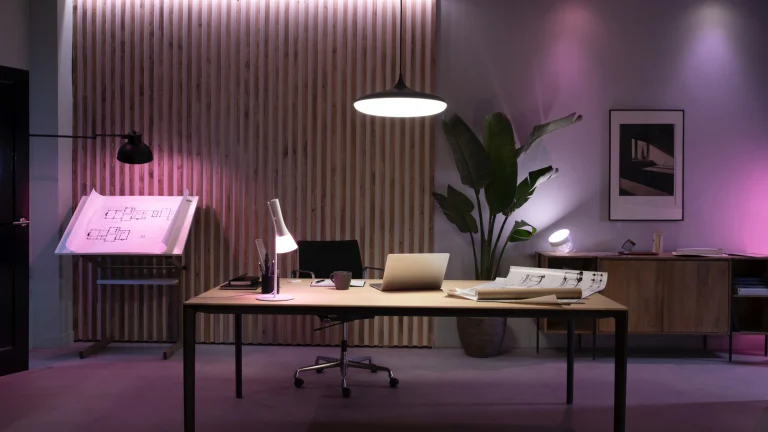
To combat these systemic issues, organizations and remote professionals are increasingly adopting dynamic lighting systems designed to mirror the natural shift of the sun. Exploring the impact of circadian rhythm lighting on office work focus involves a strategic mix of photobiology, interior design, and scheduling discipline. This comprehensive guide details how shifting light frequencies influence human hormones, compares key hardware approaches, presents practical workplace scenarios, and provides a clear framework for building a light setup that supports natural alertness and long-term mental focus.
Overview of Impact of Circadian Rhythm Lighting on Office Work Focus
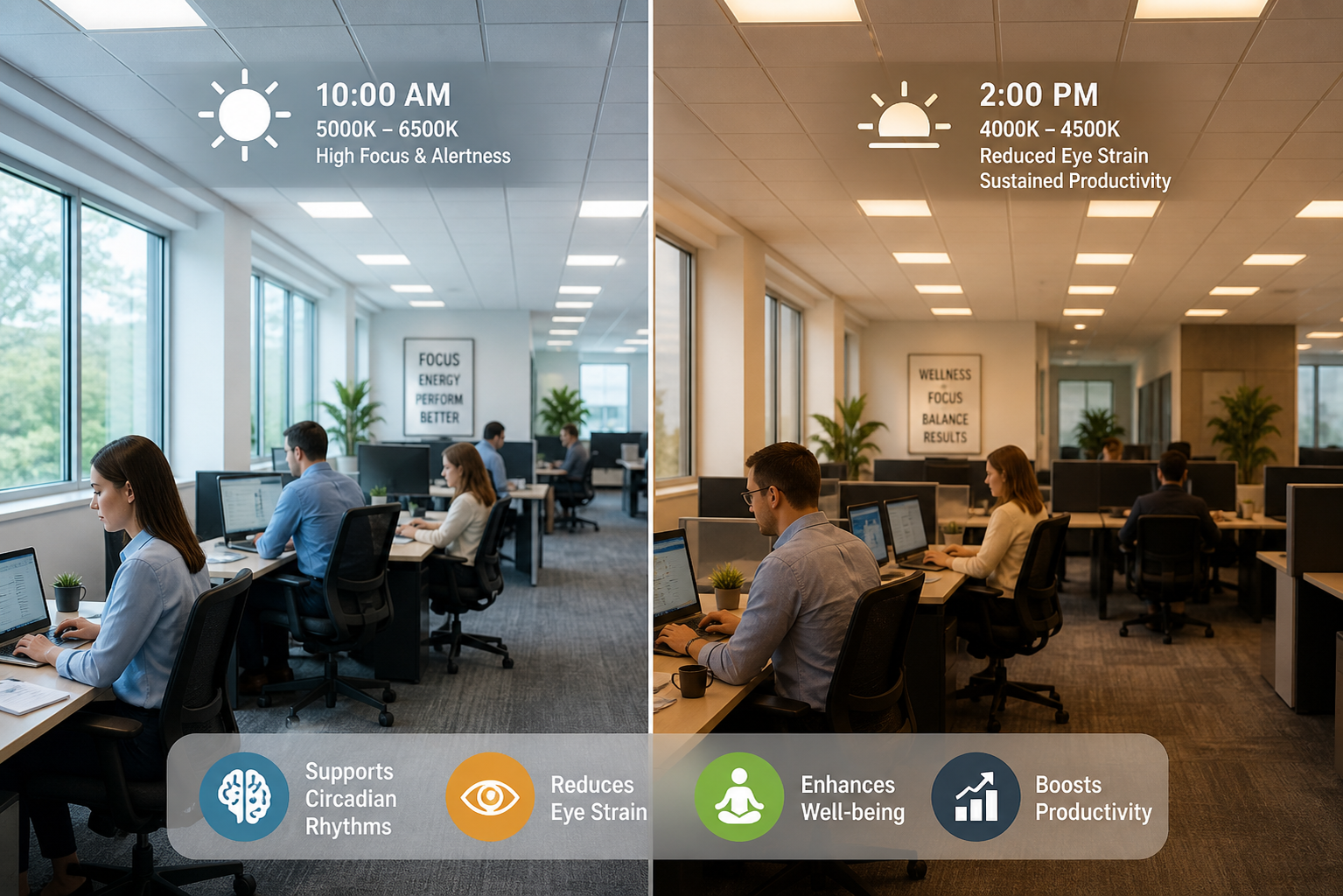
To fully grasp the impact of circadian rhythm lighting on office work focus, one must look at the internal anatomy of the eye. Nestled within the retina are specialized cells known as intrinsically photosensitive retinal ganglion cells (ipRGCs). These cells do not contribute to visual imagery; instead, they contain a light-sensitive photopigment called melanopsin, which is highly sensitive to blue light wavelengths falling within the narrow 460 to 490-nanometer range. When these short blue wavelengths strike the retina, the ipRGCs fire neural signals straight to the suprachiasmatic nucleus (SCN)—the master biological clock in the brain—instructing it to stop producing the sleep hormone melatonin and increase the production of cortisol, which drives morning alertness.
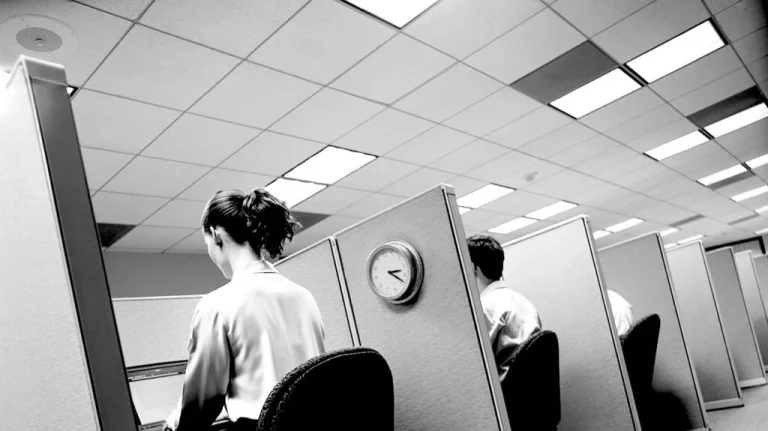
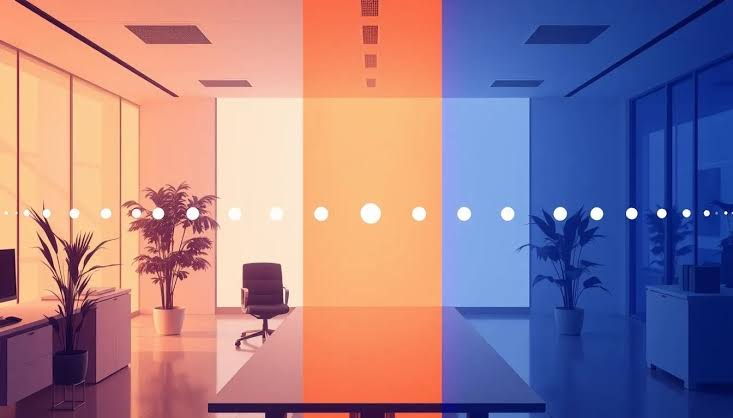
In a traditional office setting, lights emit the exact same color temperature and brightness from 8:00 AM to 5:00 PM. This static lighting confuses the master clock, often tricking the body into a state of semi-drowsiness during peak afternoon focus blocks. By contrast, circadian rhythm lighting systems systematically shift their color profiles and intensity over the day. They start with a bright, blue-enriched white light in the morning to spark early alertness, and gradually soften into a dim, warm amber glow by late afternoon to allow for a natural wind-down. When implemented correctly, the expected result is a sharp drop in afternoon sluggishness, cleaner cognitive processing speed, and better evening sleep quality due to healthy, natural hormone tracking.
Core Categories of Circadian Lighting Architectures
Optimizing an office space for biological health requires choosing the right hardware and control layouts, which can range from centralized corporate installations to portable consumer accessories.
Circadian Hardware Modality Comparison
| Category / Type | Description | Common Use Case | Time / Cost / Effort Level |
| Tunable Spectrum LEDs | Advanced LED bulb arrays containing separate cool and warm diodes regulated by a smart control box. | Permanent corporate buildings or dedicated remote home offices. | High upfront hardware cost; automated time investment; lowest daily effort. |
| Daylight Harvesting Modules | Architectural systems that use photo-sensors to automatically dim interior electric lights when natural sunlight is bright. | Spaces featuring large external windows or open floor plans. | Premium construction cost; requires professional integration; low daily effort. |
| Personalized Desk Task Fixtures | Standalone desk lamps or monitor bars configured with manually tunable color dials. | Cubicles or shared environments where users cannot change the main building fixtures. | Budget-friendly; immediate installation; moderate daily manual effort. |
| Software-Driven Screen Modulators | Operating system profiles that shift display monitors away from harsh blue light as evening nears. | Multi-screen digital workspaces where users spend long hours staring at screens. | Free; immediate implementation; zero ongoing effort. |
Selecting the ideal category depends on how much control you have over your physical workspace architecture. If you own your property or have an adjustable budget for corporate facility designs, installing tunable spectrum LEDs and automated daylight harvesting modules provides a complete, hands-free solution. If your spatial boundaries are restricted by a standard commercial office lease, you can still experience the benefits of this strategy by combining personalized desk task fixtures with software-driven screen modulators to protect your immediate visual field.
Practical Workplace Application Scenarios
The practical application of biological lighting changes depends heavily on your daily work tasks and the physical structure of your office. Below are three common real-world scenarios.
Scenario 1: The High-Throughput Financial Trading Floor
This environment is characterized by high stress, multiple computer displays, and a critical need for rapid data processing and sustained mental focus from early morning onward.
-
Actionable Layout Steps:
-
Program the overhead LED arrays to deploy a crisp 5000K to 6000K blue-enriched daylight profile at 8:30 AM.
-
Maintain a high brightness level of 500 lux across all workspace surfaces to maximize visual contrast.
-
Gradually soften the temperature down to a neutral 4000K after 2:00 PM to match the natural outdoor afternoon curve.
-
-
Why Relevant: Flooding the workspace with short blue wavelengths during the morning peak suppresses early melatonin spikes, helping to sharpen decision-making speeds and maintain focus during high-pressure market blocks.
Scenario 2: The Creative Architectural Design Studio
This space demands high visual focus for drawing and color matching, along with a relaxed ambient environment that supports group collaboration and brainstorming phases.
-
Actionable Layout Steps:
-
Configure the main lighting to use an automated 24-hour sun-tracking schedule.
-
Utilize high Color Rendering Index (CRI of 95+) tunable bulbs to ensure colors look perfectly accurate during design assessments.
-
Transition the studio lights down to a soft, warm 3000K spectrum by late afternoon during team collaboration meetings.
-
-
Why Relevant: Linking color accuracy with a gradual late-afternoon warm shift keeps designers comfortable during detail work while lowering physical stress and eye fatigue as the shift winds down.
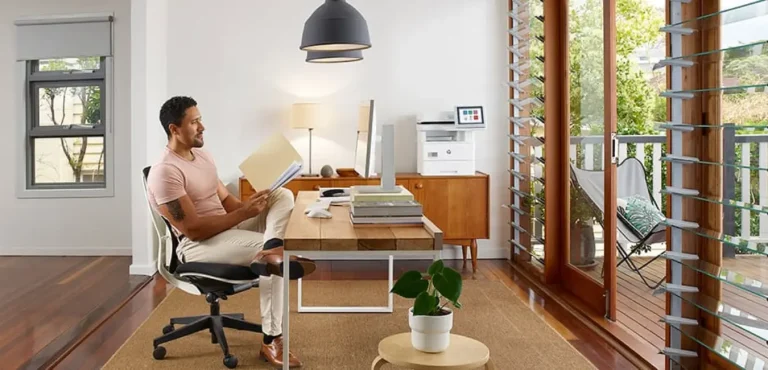
Scenario 3: The Dedicated Home Office Tech Workspace
A remote professional operates from a dark spare room or basement and struggles with severe mid-afternoon drowsiness and fuzzy focus.
-
Actionable Layout Steps:
-
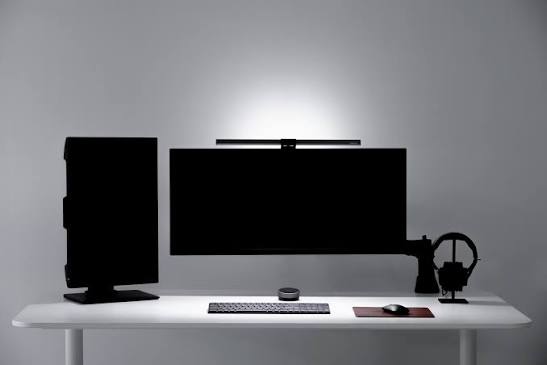
Install a smart, programmable LED light bar directly on top of the computer monitor bezel.
-
Attach an automated ambient LED strip to the back of the desk to project a soft glow onto the wall behind the screen.
-
Link the lighting modules to local sunset times using a smartphone app, shifting the lights from a bright 4500K at noon to an amber 2700K by 6:00 PM.
-
-
Why Relevant: This layout brings vital circadian cues into a dark room, replacing missing natural sunlight with artificial blue wavelengths in the morning to maintain focus and energy through the afternoon slump.
Contextual Comparison
These three scenarios differ based on their primary operational goals. Scenario 1 utilizes high-intensity blue wavelengths as a powerful tool to drive focus and speed during high-stress work. Scenario 2 pairs biological tracking with color precision to support delicate creative tasks. Scenario 3 functions as a health preservation system, bringing missing daylight rhythms into a dark home space to safely regulate energy levels and sleep patterns.
Financial Planning and Component Resource Allocations
Upgrading an office to support your biological clock requires a well-planned budget. Buying random smart accessories without checking their wavelength metrics or control software can leave you with a mismatched system that fails to improve comfort. A phased implementation plan ensures you target high-impact changes first.
Circadian System Sourcing Framework
| Category | Estimated Amount / Effort | Explanation | Optimization Tips |
| Tunable Bulb Inventory | $45 – $150 / Low Effort | High-quality LED smart bulbs capable of shifting independently across cool white and warm amber spectrums. | Prioritize bulbs that feature a dedicated hardware schedule memory so they work even if your home internet drops out. |
| Asymmetric Light Bars | $40 – $120 / Low Effort | Monitor-mounted desk lamps that provide clean, non-glare task light while shifting color temperatures. | Select a model with an integrated ambient sensor that balances desk brightness automatically. |
| Control Interface Hubs | $30 – $80 / Moderate Effort | Wireless bridges or smart switches that coordinate schedules across multiple fixtures simultaneously. | Group all fixtures into a single digital “Workspace Zone” to ensure color changes occur in perfect sync. |
| Daylight Sensors (Lux) | $20 – $50 / Moderate Effort | Wireless light meters that monitor ambient room brightness to lower electric bills on sunny days. | Place the sensor near your window sill to track real-world incoming sunlight levels accurately. |
Note: The price projections and component configurations listed in this matrix serve as general market examples for the year 2026 and can change based on your local retail options, selected brands, and the scale of your room.
Strategic Implementation Tools and Methods
Several specialized tools and design choices can help professionals integrate biological lighting principles smoothly into their daily workflows.
1. High-Melanopic LED Arrays
Specialized LED lighting components engineered to produce a specific spectral hump inside the blue-cyan range ($480\text{ nm}$) without looking overly harsh or clinical.
-
Advantages: Maximizes alertness and morning focus; requires less total light brightness to trigger your body’s biological clock.
-
Disadvantages: Costs noticeably more than standard residential LED bulbs; usually requires buying from professional commercial suppliers.
2. Automated Smart Calibration Controllers
Central software control cards or smart home applications that calculate your exact local latitude and longitude to shift light temperatures in real-time sync with the sun.
-
Advantages: Completely hands-free operation; stops human error from forgetting to shift light settings; replicates natural outdoor shifts perfectly.
-
Disadvantages: Requires an active internet connection to pull local solar times; initial software pairing can be complex.
3. Indirect Cove Light Bounces
An interior design layout where light fixtures are hidden inside wall recesses or ceiling trays, bouncing light off architectural surfaces before it enters your eyes.
-
Advantages: Mirrors the soft, open glow of the natural sky; completely eliminates harsh glare spots; cuts down on eye strain.
-
Disadvantages: Requires custom drywall cuts or dedicated mounting trims; drops the total light intensity, requiring brighter base bulbs.
Operational Risks, Errors, and Safety Challenges
When configuring an office to use biological lighting principles, users must avoid common installation and scheduling mistakes that can accidentally cause head aches or throw off sleep cycles.
-
Deploying Blue Light Too Late in the Afternoon: Running a high-intensity, 5000K blue-white daylight profile past 4:00 PM keeps your brain in an artificial morning state. This blocks the natural release of melatonin, causing racing thoughts and insomnia when you try to sleep later that night. Mitigation: Ensure your smart schedules begin shifting your workspace lights away from blue frequencies and down into a warm amber palette (under 3000K) at least three hours before your target bedtime.
-
Creating Severe Screen Contrast Gaps: Lowering your room’s overhead lights into a warm evening mode while leaving multiple large monitor displays running at blinding factory brightness creates an uncomfortable contrast gap. Your eyes will struggle to adjust between the two zones, leading to tension headaches. Mitigation: Pair your room’s circadian lights with display dimming software to ensure your screens and surrounding lamps warm up and dim down in perfect sync.
-
Ignoring High-Frequency Bulb Flicker: Cheap smart bulbs often drop their brightness by using fast electrical pulse cycles (Pulse-Width Modulation). This introduces an invisible, rapid flicker that can cause severe eye fatigue and migraines over a long shift, completely ruining your focus. Mitigation: Look for light models labeled explicitly as “Flicker-Free” or “Direct-Current (DC) Dimming” on the manufacturer’s specification sheet.
-
Over-Dimming the High-Focus Morning Work Block: Setting your morning workspace lights to a low, warm amber setting out of a desire for cozy comfort can trick your brain into an evening state, triggering early yawns and slow mental processing. Mitigation: Keep morning task zones bright and cool (at least 300–500 lux at 4500K+) to give your central nervous system the clear wake-up signal it needs to drive sharp daily focus.
Long-Term Maintenance and Best Practices
Maintaining a biologically healthy office environment requires ongoing upkeep, as changing outdoor seasons and aging electronics can slowly lower your system’s performance.
Circadian Workspace Upkeep Checklist
-
Every Sunday Evening: Clean dust and smudges away from your office light fixtures and monitor panel, as surface dust film can scatter light paths and lower contrast.
-
Every Three Months: Check your smart app automation settings to ensure seasonal changes in local sunset times are tracking correctly across your bulb groups.
-
Bi-Annual Hardware Tune-Ups: Clean out dust from the cooling vents on smart control boxes to prevent overheating and prolong the lifespan of the electronics.
-
Annual Diagnostic Check: Use a light meter app to confirm your bulbs are still outputting their original brightness levels, as high-power LED components can slowly fade over years of continuous use.
Documenting and Tracking Focus Improvements
Because changes in energy and concentration happen slowly over weeks of use, keeping a structured written record helps you connect changes in your productivity straight to your environmental adjustments.
Tips for Logging Postural and Visual Progress
Keep a simple text note or spreadsheet on your computer. Twice a day (ideally once at 10:00 AM and again at 3:00 PM), log your current light temperature, your afternoon alertness level, and any signs of eye strain or headaches.
Real-World Adjustment Records
-
Example 1 (Uncalibrated Initial Status Log): “May 12: Working under a fixed 4000K static fluorescent ceiling tube with all window shades closed. By 2:30 PM, hit a severe afternoon wall, feeling heavily drowsy and struggling to process deep analytical data. Developed a minor brow headache. Focus rating: 3 out of 10.”
-
Example 2 (Post-Calibration Progress Log): “June 4: Installed a tunable smart light bar set to a bright 5000K in the morning, shifting down to a warm 2700K by 4:30 PM. At 3:00 PM, recorded excellent physical alertness and clean mental concentration. Completed the weekly project ahead of schedule with zero eye strain or late-day yawns. Focus rating: 9 out of 10.”
Frequently Asked Questions (FAQ)
1. Does circadian lighting require completely replacing my existing office lamps?
Not necessarily. If your current office lamps utilize standard screw-in sockets (like E26 or A19 bases), you can easily add circadian functionality simply by swapping out your old bulbs for smart, tunable LED variants. You only need to replace full light fixtures if you are moving to advanced, commercial-grade architectural layouts like integrated indirect wall coves.
2. How do computer blue-blocking glasses fit into a circadian lighting plan?
Clear blue-blocking glasses are helpful tools if you work in a corporate cubicle where you have no control over harsh overhead fluorescent lights. However, if you have already set up a personalized, smart circadian lighting system that tracks natural solar curves, wearing heavy blue-blocking lenses during the morning hours can actually backfire. It blocks the vital blue wavelengths your eyes need early in the day to stop melatonin production and build alertness.
3. What is the ideal light color temperature for a high-focus morning work block?
For high-focus morning work blocks where accuracy and speed are critical, aim for a crisp, cool-white spectrum between 4500K and 5500K (Kelvin). This palette mirrors clear morning daylight, sending a powerful wake-up signal to your brain that drives alertness and cuts down on midday drowsiness.
Closing Summary
In conclusion, understanding the impact of circadian rhythm lighting on office work focus highlights a direct link between environmental light waves and daily cognitive performance. By matching your workspace’s color temperature and brightness to the natural curves of the sun—using bright, blue-enriched white light to drive morning alertness and softening into warm, amber tones in the late afternoon—you can easily remove the hidden biological stressors that cause afternoon fatigue and eye strain. Combining these smart lighting schedules with consistent gear maintenance ensures a comfortable, healthy, and highly focused workspace over the long term.